
Kedarkantha Trek Difficulty Level Explained
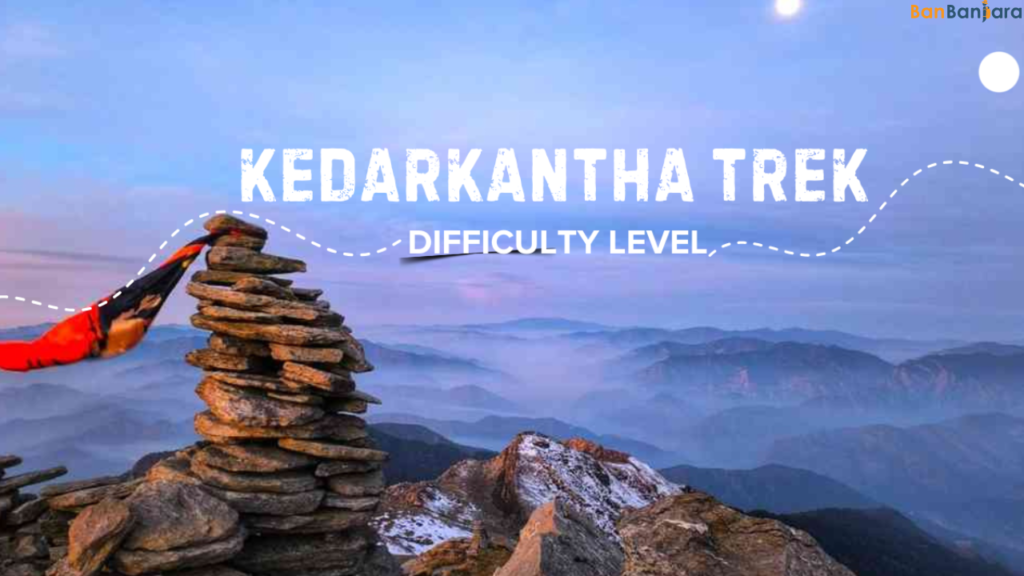
Many people question the difficulty level of the Kedarkantha trek.
Is it easy or moderate or difficult?
The answer is simple.
The difficulty level of the Kedarkantha trek is easy to moderate and is suitable for beginners with a basic fitness level.
Kedarkantha is famous as a beginner-friendly trek because it has a gradual climb and fixed camping sites for rest.
You do not need any professional mountaineering or technical climbing skills for this trek. This means there are no ropes involved and no advanced trekking experience is required.
Additionally, if you are able to do a simple cardio routine and walk for 4-6 hours a day, you can definitely complete the Kedarkantha trek comfortably.
Hence, it is a challenging trek but also manageable for most first-time travellers.
Official Difficulty Rating (Easy–Moderate Explained)
The Kedarkantha trek is rated among the easy to moderate treks.
It means it is not too hard and does not require you to be a professional climber.
Let’s understand what this rating actually means.
What “Easy–Moderate” Actually Means
- A 4-6 hours walk daily
- The trail is a gradual climb
- No climbing experience or ropes needed
- Basic fitness is sufficient
The trek has a clear trail and well-defined path but it is at a high altitude.
So, it might be physically challenging for some people but also manageable.
Why It’s Considered Beginner Friendly
Kedarkantha trek is usually considered a beginner-friendly because:
- Altitude builds gradually
- Safe campsites
- The trail is not too steep
- Guides to lead every group
- It does not require previous trekking experience
People usually choose Kedarkantha as their first Himalayan trek. Therefore,
Simple preparation like jogging or stair climbing before the trek, can help complete it.
Where It Becomes Slightly Challenging
Although the trek is easy to moderate, some parts of the trek can feel slightly challenging for the first-timers. This is due to reasons like:
- The summit climb day is longer and steeper
- Walking in the snow requires extra effort
- You feel tired faster in cold temperatures
- It takes more stamina to finish the final stretch
Because the summit starts early in the morning, it involves a steady uphill climb.
But with a slow and steady pace and guidance, most first-timers are able to complete it successfully.
Trek Distance & Daily Walking Breakdown
Kedarkantha is not a very long trek by distance, but it does require consistent walking for 4 to 5 hours each day.
Here is a simple breakdown of the distance:
Total Distance
The total distance of the trek is around 22 to 25 km for the round trip.
This distance is covered in 4 to 5 days which is divided into small parts, making it doable even for beginners.
Daily Trekking Hours
It takes around 4 to 6 hours of walking per day to cover the distance.
It could be slightly less on the first day and more on the summit day.
Steady pace and rest breaks in between make the trek easy.
Summit Day Difficulty
The summit day is the most difficult one because
- It starts early in the morning
- The climb is steeper than on previous days
- You might have to walk 6 to 7 hours that day
Maximum Altitude Gain
The starting point of the trek is Sankri at 6,400 ft.
And the summit is about 12,500 ft.
This makes the total gain of 6,000 ft, which happens gradually over the 6 days.
It helps the body adjust better.
What Makes Kedarkantha Challenging?
While the Kedarkantha trek is beginner-friendly, some factors can still feel challenging.
Snow Trekking: Walking in snow, especially during winter can be more challenging than summer. Because it takes more energy than usual and slippery trails also require careful steps.
Summit Day Steep Climb: The final day or the summit day to the top is steeper than the previous parts of the trek. This is where most beginners feel tired and stamina is required the most. But with a slow and steady walk, most people are able to complete it.
Cold Temperatures: Temperatures at zero or below at night can make the body feel tired and quick. Proper layering and good-quality sleeping bags help manage the temperature.
High Altitude (12,500 ft Approx.): At the altitude of 12,500ft, oxygen levels are lower than the sea level. This lack of oxygen may cause shortness of breath, faster heartbeat or mild headache. But symptoms can be managed by a gradual climb to reduce any serious problems.
Fitness Level Required
The Kedarkantha trek does not require you to have athlete level fitness.
But it does require you to have basic stamina and an active body.
Can Beginners Do It?
Yes. Beginners can do it too.
If you are a healthy person and can walk for a few hours daily without any difficulty, you can complete this trek.
There are many first-time trekkers who successfully reach the summit every year.
Is Gym Training Necessary?
No. Gym training is not necessary. And you do not need weight lifting or special training for this trek.
Simple cardio exercises like brisk walking, light jogging, cycling or stair climbing are enough to complete the summit.
Recommended Pre-Trek Preparation
You can begin your pre-trek preparation 3-4 weeks before the trek.
- Try to walk or jog 4 to 5 days a week.
- Practice stair climbing daily.
- Do some light stretching exercises.
- Improve breathing control.
Consistency here is the key, rather than the intensity.
Ideal Stamina Benchmark (e.g., 5km walk test)
You can try to do a simple test to check your stamina before the trek.
Check if you are able to walk 5km in around an hour without extreme tiredness.
Check if you are able to recover normally within a short time after the walk.
And if you can do this comfortably, you are now ready for the Kedarkantha trek.
Who Should Avoid Kedarkantha?
Even though the Kedarkantha is suitable for beginners, some people are advised to avoid the trek:
- People with severe asthma
- Those who have serious knee issues
- People with a zero physical activity lifestyle and no preparation
- Anyone who has had a recent major surgery
Lastly, if you have any medical condition, you should first consult your doctor before planning the trek. Safety should always be the priority.
Kedarkantha vs Other Beginner Treks (Difficulty Comparison)
Many people compare the Kedarkantha trek with other popular beginner-friendly treks to see the comparison.
Kedarkantha vs Brahmatal
Brahmatal is more difficult than the Kedarkantha trek.
It has longer walking days.
It also has steeper sections.
It is at a slightly higher altitude.
Hence, Kedarkantha is considered easier and better for first-timers.
Kedarkantha vs Triund
Triund is comparatively easier than Kedarkantha.
It is usually shorter.
It takes a day or two to complete.
Its altitude is lower.
So, if you want a shorter and simpler trek, you can consider Triund. But Kedarkantha offers a full winter trekking experience.
Kedarkantha vs Dayara Bugyal
Dayara Bugyal is at a similar difficulty level to Kedarkantha.
They are both beginner-friendly.
They both have gradual climbs.
They both look beautiful in winter.
While the climb is similar, the Kedarkantha summit is slightly steeper than the Dayara Bugyal. It makes it a bit more challenging towards the final day.
Summit Day – The Real Test
- Early morning start: The trek usually starts early in the morning between 2-4am. The walk begins in cold and dark conditions with headlamps which may feel mentally challenging to some people.
- Steep final climb: The last stretch of the trek is steeper than the previous days. For this part, you need to walk slowly and steadily, good breathing control and more patience because this part tests your stamina the most.
- Snow trail grip: During the winter, the trail is fully covered with snow. For this, microgrips are given for help, but you still need to be careful and maintain balance while walking.
- Wind exposure: The summit of the trek is an open and windy area where it is colder than the remaining trek, so proper winter clothing is important here.
Is It Safe for First-Time Trekkers?
Yes. It is safe for first-time trekkers.
To ensure safety, it is done with a professional team.
- Guided trek structure
The trek follows a guided trek structure with a fixed route and planned camps. It is a gradual climb, and you are never trekking alone with a clear schedule every day.
- Support staff
With the main trek leader, there are also support staff. One of them walks in the front and the other at the back of the trail, so no one is left behind.
- Emergency planning
There is always a decent plan for any emergency in case of altitude sickness or health problems. Oxygen support and first aid kits are always carried by the team.
- Group pacing
The pace of the walk is always slow and steady, with frequent breaks. The goal here is safety and not speed. This system works best for beginners.
Final Verdict – Should You Book Kedarkantha as a Beginner?
Kedarkantha is a good choice for your first time trek, if you are healthy and ready to prepare for a few weeks to complete it.
It is a beginner-friendly, well-guided and moderately challenging trek. And you also don’t need any prior trekking experience or technical skills.
But you should keep in mind to walk at least 4 to 6 hours daily, face cold weather and a slightly tough summit day.
Kedarkantha trek becomes a safe and unforgettable experience, if you prepare well and choose a good organiser.
So, instead of fearing altitude, focus on your preparation. With the right mindset, this trek can be a perfect start to your Himalayan adventures.