
Kedarkantha Trek Route Explained (Day-Wise Breakdown)
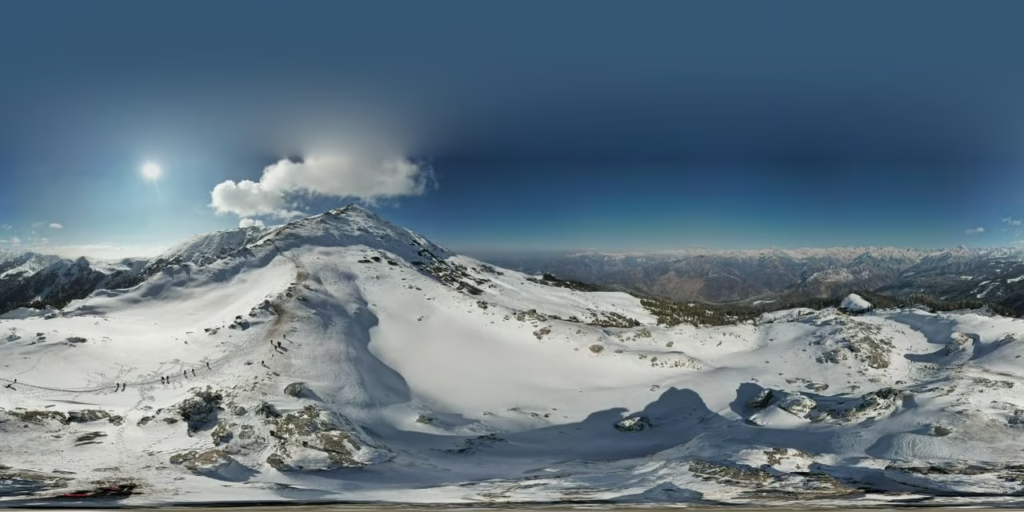
The Kedarkantha trek is one of the most famous winter treks in North India. It is popular for its snow-covered mountains, open forests and beautiful view.
This guide provides a simple overview of the route and explains its day-wise itinerary before you plan your trek.
Quick Overview of the Kedarkantha Trek Route
- Starting point (Sankri)
The starting point of the trek is a small village located in Uttarakhand, Sankri. It is well connected by road and trekkers usually reach here from Dehradun by car or bus.
It is the base camp for the trek, where you rest, meet the other trekkers and the team and prepare for your journey ahead.
- Total distance
The total distance of the trek is around 20-22 km for the round trip. This distance is covered in about 4 to 5 days. And it is divided into small parts, so it does not feel too long for beginners.
- Maximum altitude (~12,500 ft)
The maximum altitude of this trek is the Kedarkantha summit. It is approx. 12,500 ft above sea level, which is considered moderate altitude.
The climb on this trek is gradual, so it helps your body to adjust slowly as you go higher.
- Total trek duration
The trek usually takes up to 4 to 5 days to complete. The total duration includes a gradual climb to higher camps, summit day climb and descent back to the base camp, Sankri.
- Type of terrain
The terrain on the Kedarkantha trek changes as you climb higher. The trek takes you through pine and oak forests, open meadows, steeper summit and snow-covered trails (in winter).
The trail is well marked, and there is no need for you to have any climbing or rope skills. Overall, this route for this trek is simple, scenic and suitable for beginners.
Where Does the Trek Start? (Base Village Explained)
The trek starts from a small village called Sankri, which is also the base point of the trek. All the trekkers gather here before starting their trek.
The village is a quiet and peaceful place, surrounded by dense forests and mountains. It is a perfect place to relax and prepare your body for the climb.
Delhi to Sankri Route (Travel Flow)
The first thing that most travellers do is to reach Dehradun from Delhi (250 km). You can reach here by either Bus, train or a flight.
Once you reach Dehradun, you need to travel to Sankri by road. This drive passes through scenic views of small towns and rivers and can take between 8-10 hours to reach.
By evening, you reach Sankri village and rest overnight for the trek starting the next morning.
Sankri Altitude & Acclimatization
Sankri is at an altitude of 6,400 ft above sea level. This altitude is not very high, but also not very low.
It is moderate; this is why spending one night before helps your body slowly adjust to the altitude.
This process is called acclimatisation, which helps your body adjust to the altitude and reduces the chance of altitude sickness.
Why Sankri Is the Ideal Base
Sankri is ideal for the base village because
- It has good road connectivity.
- It has all the basic facilities like hotels and guesthouses.
- It is the safe starting point and the trek begins directly from here.
- It is easy to organise and safe for beginners from here.
Day-Wise Itinerary Breakdown
Let’s break down the day-wise itinerary for the Kedarkantha trek.
Day 1 – Delhi to Sankri (Drive Day)
- Travel hours: Travelling from Delhi to Sankri via Dehradun takes around 10-12 hours.
- Scenic route highlights: The beautiful drive passes through towns, rivers, mountains and forest areas. While in winter, as you go higher, you will see snow peaks.
- Overnight stay: After reaching Sankri, stay overnight in a guesthouse or hotel in Sankri. It will help your body adjust to the altitude before the trek.
Day 2 – Sankri to Juda Ka Talab
- Distance: The distance from Sankri to Juda Ka Talab is around 4 km.
- Trekking hours: The total trekking hours are about 4 to 5 hours to reach the campsite.
- Forest trail description: The trail goes through pine forests, and you may also see snow on the trees.
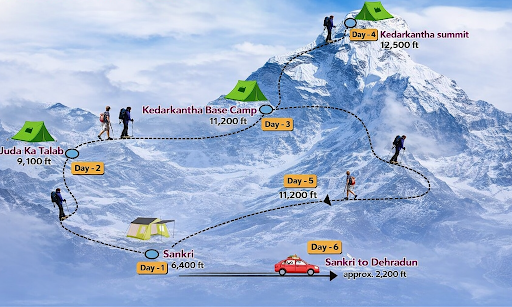
- Altitude gain: The gradual climb starts from 6,400 ft (Sankri) to 9,100ft (Juda Ka Talab).
Day 3 – Juda Ka Talab to Kedarkantha Base Camp
- Distance: The distance to the Kedarkantha base camp is around 3 to 4 km.
- Snow zones (seasonal): This section has more snow during winter, which looks very beautiful. The trail becomes white and magical. Leaders guide the trekkers carefully on snowy sections like these.
- Open meadows: As the climb progresses, the forest becomes thinner and you get to see wide open meadows.
- Campsite altitude: The base camp is at 11,200 ft. You can also see the Kedarkantha summit from here clearly.
Day 4 – Base Camp to Kedarkantha Summit & Return
- Early morning summit push: The next day starts early in the morning at 3-4 am. The climb begins with light snacks and headlamps in your hand. This early start helps reach the summit safely on time.
- Steep section explanation: The summit part of the trek is the toughest part. This final climb has the steepest sections, especially near the top. The trail gets covered in snow during winter, where you need to walk carefully and slowly.
- Summit altitude: The Kedarkantha summit is at 12,500 ft. The view from the top shows Himalayan peaks and wide mountain views.
- Descent difficulty: After spending some time at the summit, you carefully descend back to the base camp. Going down is faster, but it needs more balance and control.
Day 5 – Base Camp to Sankri
- Descent details: On day 5, you descend from base camp to Sankri, which is around 6-7 km. While the descent is easier than climbing, it can feel long on the knees.
- Return comfort: You return through forests and clearings back to Sankri. Stay here overnight, rest and have proper food. This feels very comfortable and relaxing after days of camping.
Day 6 – Sankri to Delhi
- The next morning, you return from Sankri to Delhi. This drive back takes around 12 hours and you reach Delhi by evening or night.
Your journey comes to an end here with so many beautiful memories of the trek.
Kedarkantha Altitude Chart (Stage-Wise Elevation Gain)
Day | Stay / Stop Location | Altitude (in feet) |
Day 1 | Sankri | 6,400 ft |
Day 2 | Juda Ka Talab | 9,100 ft |
Day 3 | Kedarkantha Base Camp | 11,200 ft |
Day 4 | Kedarkantha Summit | 12,500 ft |
Day 5 | Return to Kedarkantha Base Camp | 11,200 ft |
Day 6 | Sankri (Drive to Dehradun) | 6,400 ft |
— | Dehradun (Trip End Point) | ~2,200 ft |
Terrain Type Explained (What You’ll Actually Walk On)
The terrain of the Kedarkantha trek keeps changing every day. So, it is important to understand what you will actually see during your trek.
Pine Forest Trails
At the beginning of the trek, the trail passes through thick pine forests. This path is wide and clear. While the ground is muddy and dry in summer, it is filled with snow in winter.
The forest trail is peaceful and shaded. And the climb is gradual.
Snow Sections (Winter Months)
The large parts of the trail are covered in snow during winter (December-March). It usually starts after Juda ka Talab and becomes more as you go higher.
Trek leaders guide you carefully as you walk through packed or fresh snow. They also provide microspikes for better grip, depending on the weather.
Ridge Walk Before Summit
There also comes a ridge section before the summit. This part of the trek is open and slightly more exposed.
While the final climb is steeper than on other days, it is still a trekking trail and not a climbing trail. You can walk in zig-zag motion until you reach the summit.
Open Meadows & Campsites
You will see open meadows and campsites between the forest sections. These are usually the base camp areas that have wide open views of surrounding peaks, while the campsites are flat and safe for tents.
Is the Route Safe for Beginners?
Yes. The Kedarkantha trek is absolutely safe for beginners with a healthy body.
It is also safe because:
- The trek has a gradual ascent, so the altitude increases slowly over 4-5 days.
- It does not require any ropes, technical climbing or mountaineering skills.
- It has managed campsites with camps set up at safe and fixed locations.
- The trail is guided by trek leaders, and local guides also accompany the group.
Common Route Confusions (Clearing Myths)
Many beginners have some confusion about the Kedarkantha route. Let’s clear some common myths.
Are There Multiple Kedarkantha Routes?
Yes, there are a few more routes to the Kedarkantha trek. But most of the trekking companies follow the standard route, and the path remains the same for everyone.
Sankri → Juda Ka Talab → Kedarkantha Base Camp → Summit → Return.
Is the Route Circular or Same Way Return?
The route is usually a circular one because after reaching the summit, you have to descend to the base camp from a different trail.
Although the overall trek returns to Sankri, it is not technically a full circular trek.
Does the Route Change in Snow Season?
While the route remains the same in winter as well.
There are a few adjustments made for safety depending on the depth of snow and weather conditions. Trek leaders may slightly change the walking line, but the campsites and main stops stay the same.
Hence, the route of the Kedarkantha trek is well-marked, manageable, and beginner-friendly.
Final Summary – What to Expect from the Route
Here is a clear summary of what the Kedarkantha trek actually feels like.
Distance clarity: The total distance of the trek is around 20-22 km. This distance is covered in 4-5 days. And it usually involves 4-6 km walking each day, except the summit day, which is slightly longer.
Altitude clarity: The altitude increases gradually which helps the body time to adjust. The summit at 12,500 ft is high but still manageable for beginners with good health.
Sankri – 6,400 ft, Juda Ka Talab – 9,100 ft, Base Camp – 11,200 ft, Summit – 12,500 ft.
Physical demand overview: The trek is of a moderate level. It demands you to walk uphill for a few hours each day and climb a steeper section on the summit day. During winter, the walk can become more challenging due to walking in the snow.
It does not require any climbing skills, but you should have basic stamina for walking 5-6 hours daily.
Overall, the route is challenging but safe and achievable enough for first-time trekkers with proper preparation.