Kedarkantha Trek Safety Guide
Is It Safe for Beginners?
Feeling doubtful about the Kedarkantha Trek?
Can a beginner do it safely?
All such questions can make any first-time trekker feel nervous, and it’s completely fine. Kedarkantha is one of India’s most popular treks during winter. Thousands of people go to trek this beautiful mountain every year, and many of them are like you.
Because, as a first-time trekker, it might make you feel worried. And it is normal to feel this way. Most of the trekkers are worried about getting sick due to altitude, minus temperature or walking over the snow, or maybe slipping and getting injured.
All these fears are valid and real. But the reality is that the Kedarkantha trek is a very beginner-friendly trek. It is considered one of the safest treks for most healthy people, yet proper preparation and guidance are required. This guide outlines the real risks and how to manage them on the trek.
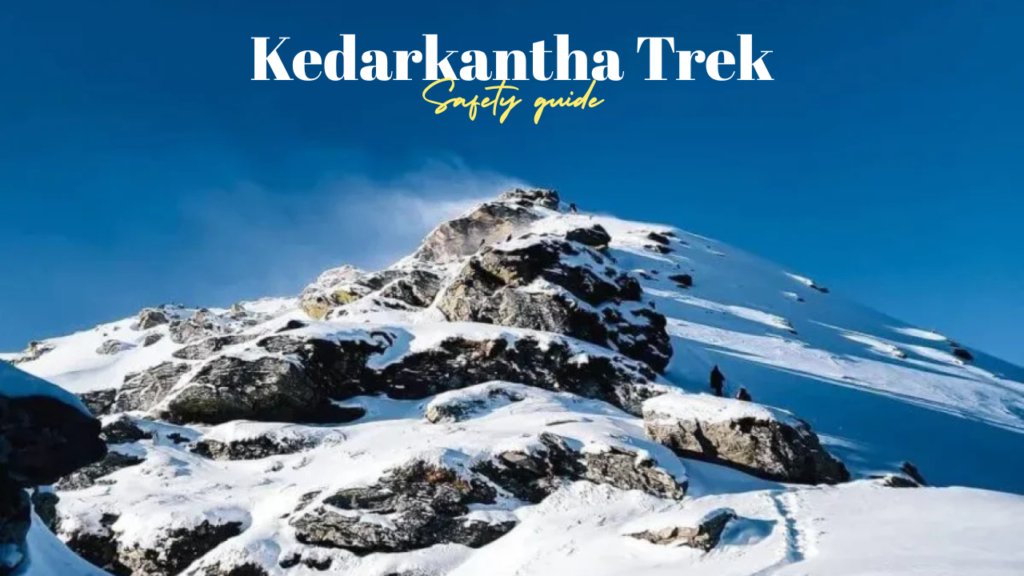
Is Kedarkantha Trek Safe for Beginners?
A simple answer to this question is “Yes”. Kedarkantha is surely safe for any beginner who wants to go on a winter trek. It can be done properly with necessary preparation and booked via a good trekking company.
Let’s understand exactly how it is safe.
- Beginner-friendly gradient
The trail of Kedarkantha is not very steep. The climb feels steady and feels like a gradient. The path allows you to walk for a few hours a day and get enough rest in between as well. It’s clear and well-travelled, as many trekkers visit this trek every year.
While during winters, guides make proper routes on the snow for easy access to the trek.
This trek does not require you to have technical climbing skills.
- Gradual altitude gain
One of the biggest fears is the high altitude because it can make people feel sick. Kedarkantha is at a height of 12,500 ft, but it is manageable as it increases its height gradually. This gives time for the body to adjust to the altitude. Another thing is that the climb is slow with camps at different points which reduces the risk of any serious altitude sickness.
There are also guides with you who can help you with symptoms like:
- Headache
- Extreme tiredness
- Lack of breath/dizziness
- Nausea
If someone faces any serious issues, they are taken down to the lower camp immediately.
- Structured camping points
Kedarkantha has structured camping points in between the trail. The camps are located carefully for safety and comfort. They usually include tents with sleeping bags, water, a trained guide and warm food.
In winter, snow tents are placed away from any slopes in safe areas. Leaders check weather conditions prior to and during the trek regularly. And there is always a team for support and guidance.
- Guided trek system
People generally do this Kedarkantha trek with an organised trekking company. This makes the planning easier and much safer.
This guided trek includes:
- Experienced trek leader
- Guide
- Support staff
- First aid kit
- Oxygen cylinder for any emergency
All of this makes a guided trek system where the teams are well trained to handle snow conditions and any basic medical problems.
It is recommended for beginners to go with a guide. Going solo is not advised for people with no experience.
Understanding Altitude & AMS Risk
The biggest fear while doing a trek is altitude sickness because when you go high on a mountain, the air becomes thin. It makes less oxygen available for the body.
So, it’s better to understand how a Kedarkantha trek works:
What Is the Maximum Altitude of Kedarkantha?
First, we need to understand the altitudes of Kedarkantha.
The Kedarkantha summit is at around 12,500 ft, which is 3,800 m above the sea level.
This could sound too high for a first-time trekker but the important thing here is how you reach that summit.
There are multiple campsite altitudes and here is their comparison:
- Base at Sankri village (around 6,400 ft)
- First campsite at Juda ka talab (around 9,000ft)
- Second campsite at Kedarkantha base camp (around 11,000 ft)
- Summit (12,500 ft)
So the height here increases gradually over several days. It’s nothing like climbing 12,500 ft at once.
Hence, this slow climb helps your body to adjust better to the altitude. And it makes the Kedarkantha trek safer as compared to other faster and higher treks.
Can You Get Altitude Sickness on Kedarkantha?
Yes, it is possible to get altitude sickness on Kedarkantha.
It is known as acute Mountain sickness (AMS).
The risk of AMS on Kedarkantha is generally moderate. It happens when your body is not able to adjust to the high altitude.
There are mainly three reasons why Kedarkantha has a moderate risk:
- The summit is not extremely high. It is at a height of 12,500 ft and the risk of high AMS increases more above the 14,000-15,000 ft. and Kedarkantha stays below that range.
- The trek has a gradual climb and takes at least 4-5 days to complete. So this gives the body the time to adjust to the high altitude.
- The trek has a quick descent option, too. If someone feels unwell on the way, they can be taken to the lower campsite real quick. Because going down is the quickest way to deal with AMS.
Summon symptoms for AMS:
- Nausea
- Headache or vomiting
- Loss of appetite
- Dizziness
- Sleeplessness
- Extreme tiredness
And in most cases in Kedarkantha, symptoms are mild and improve with time and rest.
Why Acclimatization Is Important
Acclimatisation means giving the body time to adjust to the high altitude with lower oxygen levels.
- Kedarkantha trek naturally helps with acclimatisation because
- The climb is slow and gradual
- You rest in sleep in between, increasing the height step by step.
- There is no rush to reach the summit on the first day itself.
To reduce the AMS risk, you can drink enough water, avoid alcohol and smoking, walk at a steady and slow pace, and inform your leader if you feel any uneasiness.
How Trek Leaders Monitor Health
Safety is taken very seriously by the trek leaders. Trek leaders are trained to handle such situations and watch for the early signs of health problems, especially AMS.
They are not just mere guides for the group. They also check everyone’s health every day.
They monitor trekkers during the journey by checking their oxygen daily and pulse monitoring.
One of the most important safety rules is the slow ascent protocol: climb high, but slow.
Hence, daily checkups, careful observations and slow climbing make the Kedarkantha trek a safe and beginner-friendly trek.
Winter Safety – Snow & Cold Conditions
The Kedarkantha trek is most popular in the winter season.
The snow covered mountain views make it even more magical. But it also brings cold and snow related risks.
To understand this, we should know the answer to a few important questions:
How cold can it get?
So, in winter, the temperature can drop significantly at night.
The temperature during the day is around 8°C to 15°C in lower camps and 0°C to 5°C near the summit.
While in the night it can drop to -5°C to -10°C at higher camps.
Wind chill factor!
Winds at the Kedarkantha trek can get even colder than the temperature. It’s called the wind chill effect.
It usually happens under the temperature of -5°C. When the strong wind can make it feel like -10°C or lower. This is why a proper wind breaker, jackets, gloves and caps are very important.
Is Snow Trekking Dangerous?
Snow drawing trekking may look scary and tricky, but Kedarkantha is usually safe to do when done carefully.
This is made possible with appropriate equipment and proper measures.
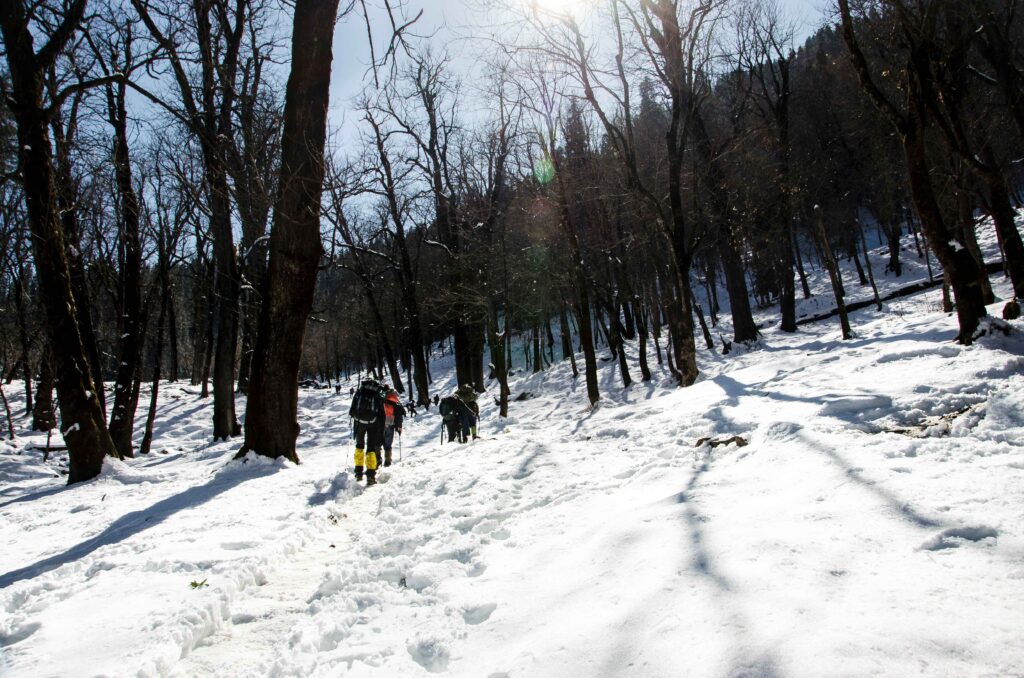
The snow trails during winter become firm and packed because many groups trek at that time.
This creates a clear walking path with sturdy snow for trekkers.
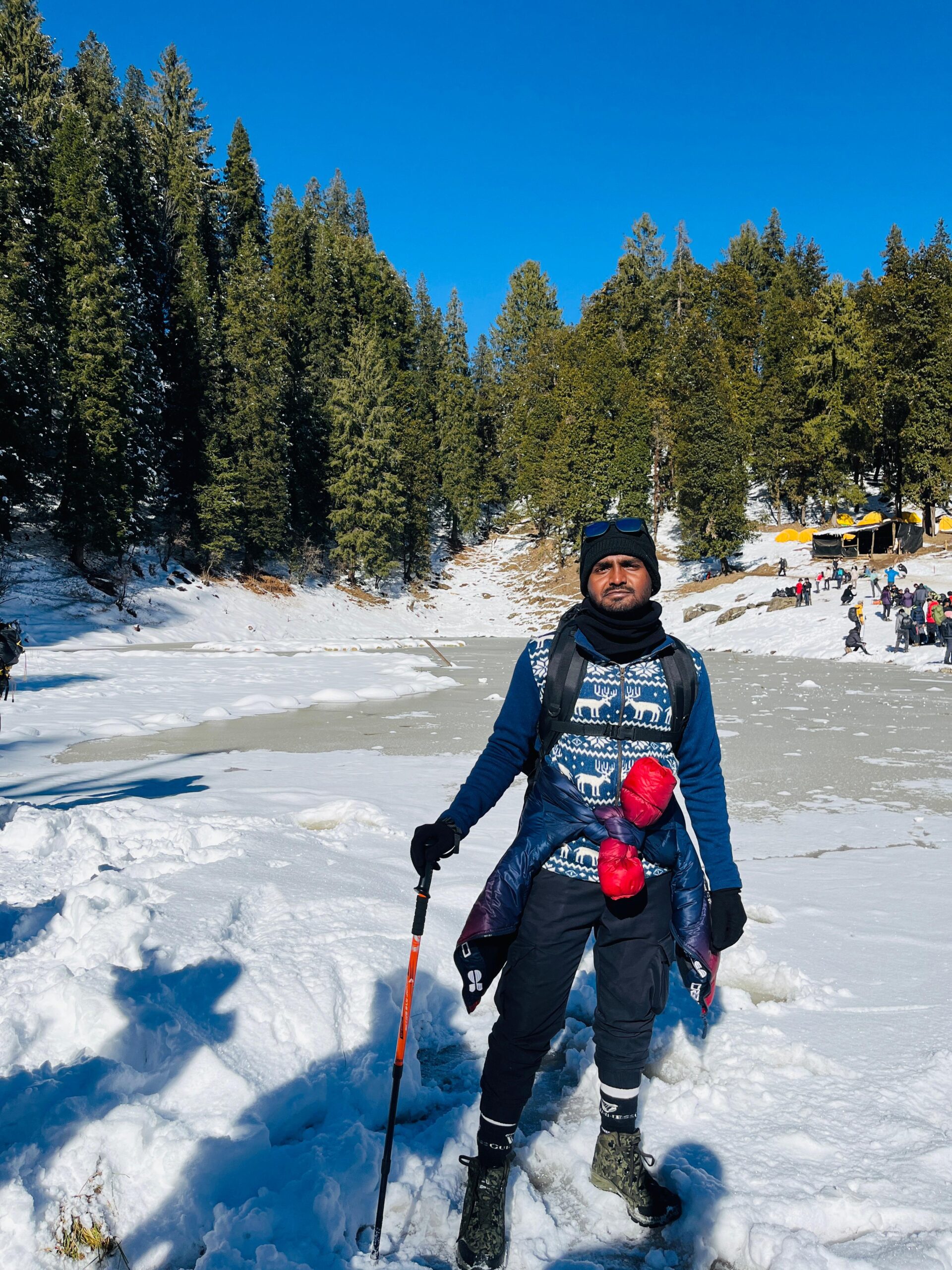
In such icy trails, trekkers use microspikes. These are small metal spikes attached to your shoes which improve the grip, reduce the risk of slipping and make walking easier on the ice.
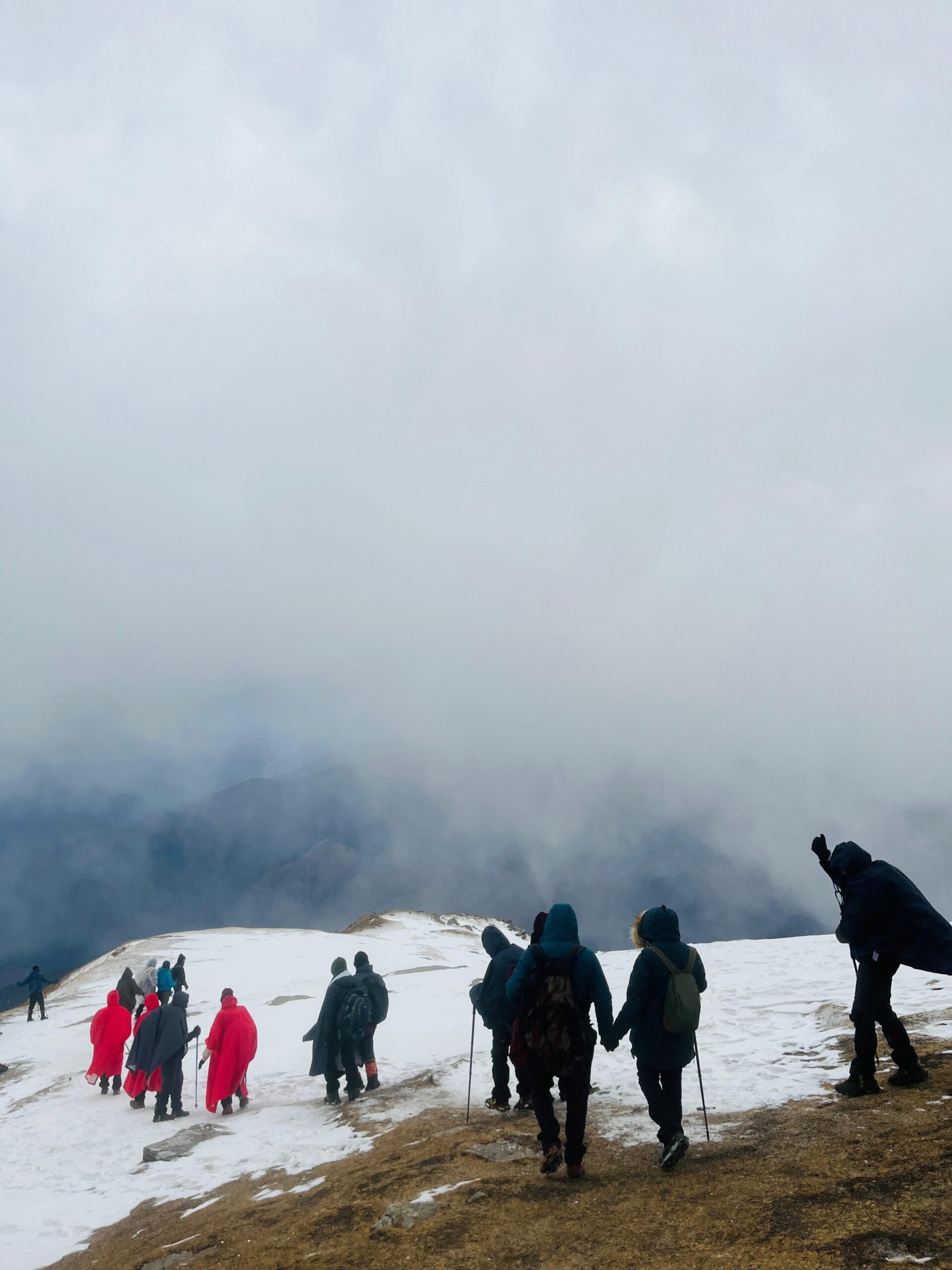
Trek leaders follow a guided walking system. It goes like a guide walking in front and the group following the line while the support staff walks at the back. This keeps everyone safe and also reminds trekkers to walk slowly and carefully.
Equipment That Keeps You Safe
Equipment plays a very important role for safety purposes in a winter trek.
Sleeping bags – These bags are designed to handle sub-zero temperatures. The bags are high-quality to be able to trap body heat and keep the trekkers warm at night.
Tents – Winter tents are placed in a safe and stable area and can handle strong cold winds. Ground sheets and added insulated layers help reduce the cold from the snow on the ground.
Trekking poles – These poles help with maintaining balance on snow and downhill sections. They also help reduce pressure on knees, improve stability and prevent any slips.
Gaiters – Gaiters stop the snow from entering your shoes. They are worn over the shoes and lower pants as they keep your feet dry, warm and comfortable.
Role of Trek Leaders & Support Staff
Safety on the Kedarkantha trek depends on trek leaders and support staff.
The trek includes certified trek leaders who are trained, educated about altitude safety and skilled in first aid. Many leaders have done special mountaineering courses. They are professional in keeping everyone safe and know how to handle snow, weather or any emergency situation.
There are local guides who belong to the mountain villages and know the Kedarkantha region well. They understand the terrain, weather patterns, camping spots and any shortcut for descent.
One trek leader can lead around 8-12 trekkers and a support staff walking by the back. Smaller groups are usually safer as compared to very large groups.
Both the leader and staff are trained for basic first aid, CPR, using oxygen cylinders and identifying any AMS symptoms. They always carry emergency contact divices and help everyone stay calm or act quickly when needed.
Emergency & Evacuation Protocol
The biggest question for many parents and first-time trekkers is:
“What happens if anything goes wrong?”
Answer is:
There are clear emergency and evacuation plans on the Kedarkantha trek. Because it is not extremely remote, roads are easily accessible.
The starting point of the trek is Sankri village, which is nearest to the road. So, if someone needs to be evacuated, they are brought down to the village and then travel to a nearby hospital.
There is a simple rule of safety: If the symptoms worsen, descend immediately.
If any trekker shows some serious symptoms like severe altitude sickness, breathing difficulty or continuous vomiting. The leader can decide to either stop the ascent, send the person to the lower camp or arrange a descent village to the base village.
The network may not be available at some points during the trek. But they are usually available at Sankri, while some leaders also carry wireless or satellite communication devices. This reassures the parents for their safety.
Weather plays a major role in the mountains, especially trekking. Leaders check weather forecasts prior to departure, monitor daily updates and adjust their plans accordingly.
Common Safety Myths About Kedarkantha Trek
- “Snow treks are very risky”
This is not entirely true. Snow trekking remains safe when it is done with proper gear, a guide and a fixed trail.
- “Beginners shouldn’t attempt it”
The Kedarkantha trek has a gradual climb and fixed camps, making it suitable for even beginners.
- “Extreme altitude makes it unsafe”
The altitude of Kedarkantha is around 12,500, which is a moderate altitude. And the slow ascent also reduces the chance of any serious risk.
- “You need prior trekking experience”
No. You do not need prior trekking experience. Basic fitness and preparation are sufficient for this trek.
Who Should Avoid the Kedarkantha Trek?
Kedarkantha trek is mostly safe for any healthy beginner, but people with some health issues should avoid it.
- Severe asthma
- Heart conditions
- Recent major surgery
- Unfit individuals without preparation
Also, if they have any other medical issues, they must consult their doctor before planning the trek.
Safety Tips for First-Time Trekkers
If you are planning the trek to Kedarkantha for the first time, there are some safety tips for first-time trekkers that can help you stay safe.
- Start basic cardio 3–4 weeks before the trek. Like walking, jogging or stair climbing to build your stamina.
- Drink enough water to stay hydrated during the trek, even if you don’t feel thirsty.
- Carry warm layers, good trekking shoes, gloves, a cap and essentials while packing.
- Follow the trek leader’s instructions and inform them if you feel unwell.
- Avoid alcohol before summit day because it could affect oxygen levels and increase the risk of AMS.
Final Verdict – Is Kedarkantha Trek Safe?
Yes. Kedarkantha trek is safe, even for beginners, when done with experienced organizers and guides.
The trek offers:
- Structured camps
- Gradual ascent
- Trained leaders
- Safety system
All this makes it suitable for a healthy beginner with proper preparation.
Hence, preparation matters more than fear and with the right mindset and guidance, Kedarkantha can be a safe and memorable trek.